

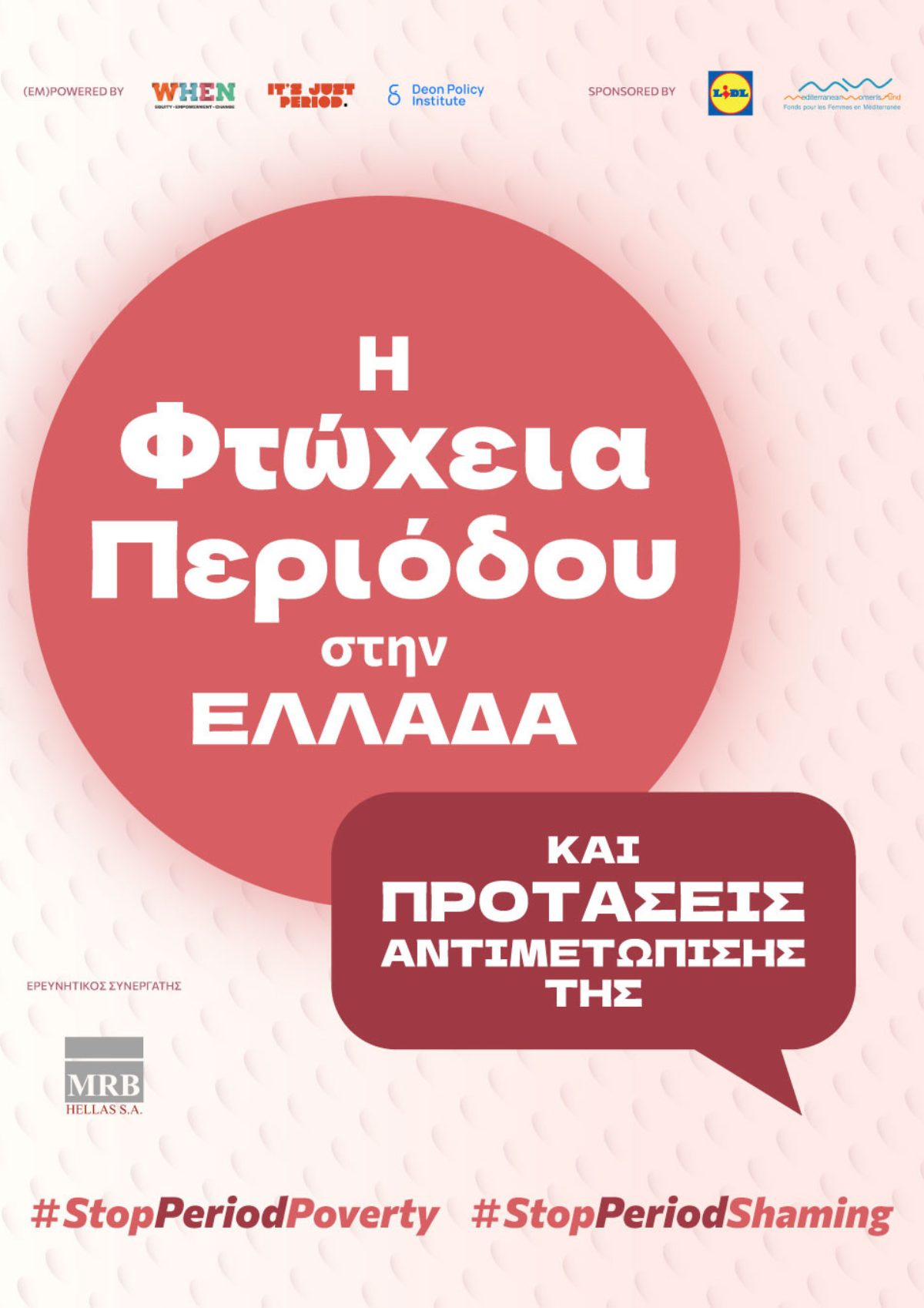
The new nationwide survey by It’s Just Period, Deon Policy Institute and WHEN maps the extent of period poverty in Greece. It also looks at the stigma around menstruation and how menstrual pain affects daily life. MRB Hellas was the scientific partner, and Lidl Hellas and the Mediterranean Women’s Fund funded the survey.
What is Period Poverty?
Period poverty is when women and girls cannot get or cannot afford menstrual products such as tampons, pads and menstrual cups. Put simply, period products cost too much around the world, so many women and girls cannot get safe, affordable ones.
Period poverty also covers poor access to proper sanitation facilities. It includes the lack of education on menstrual health and of information about it for the general public.
What causes Period Poverty?
Period poverty comes from a mix of economic, social and institutional factors. The main ones are the high cost of period products, the lack of clean water and proper sanitation facilities, and the long-standing stigma and taboos around menstruation.
Period products are still too expensive for millions of people worldwide. Policies and tax systems that ignore gender make this worse.
Period poverty is not a distant problem that affects only marginalised people and groups. It is a harsh reality for many women and girls in Greece too. The new survey by It’s Just Period, Deon Policy Institute and WHEN, with MRB Hellas as scientific partner, is the first to document it with a nationally representative sample.
With this survey, we wanted to do more than measure the problem. We also aimed to build a solid evidence base for policy measures, educational programmes and public debate. Together, these can help reduce inequalities and protect everyone’s dignity and health.
