TITLSexualHarassament_WHEN_2

Sexual harassment

Sexual Harassment

According to ActionAid’s survey, 85% of women in Greece have experienced sexual harassment at work. The cost – moral, physical, mental, communicational and financial, is enormous.

Sexual harassment and violence in the workplace have adverse consequences, both for individuals who experience it and for those who witness such incidents, for their teams, for the companies they work for, and for society as a whole.

Preventing and addressing sexual harassment in the workplace is not just an issue concerning women, the law or leaders. It is an issue that should concern each and every one of us. We all deserve to work and grow in a safe, professional environment.


TITLSTART_1640x1093_SiteFeature

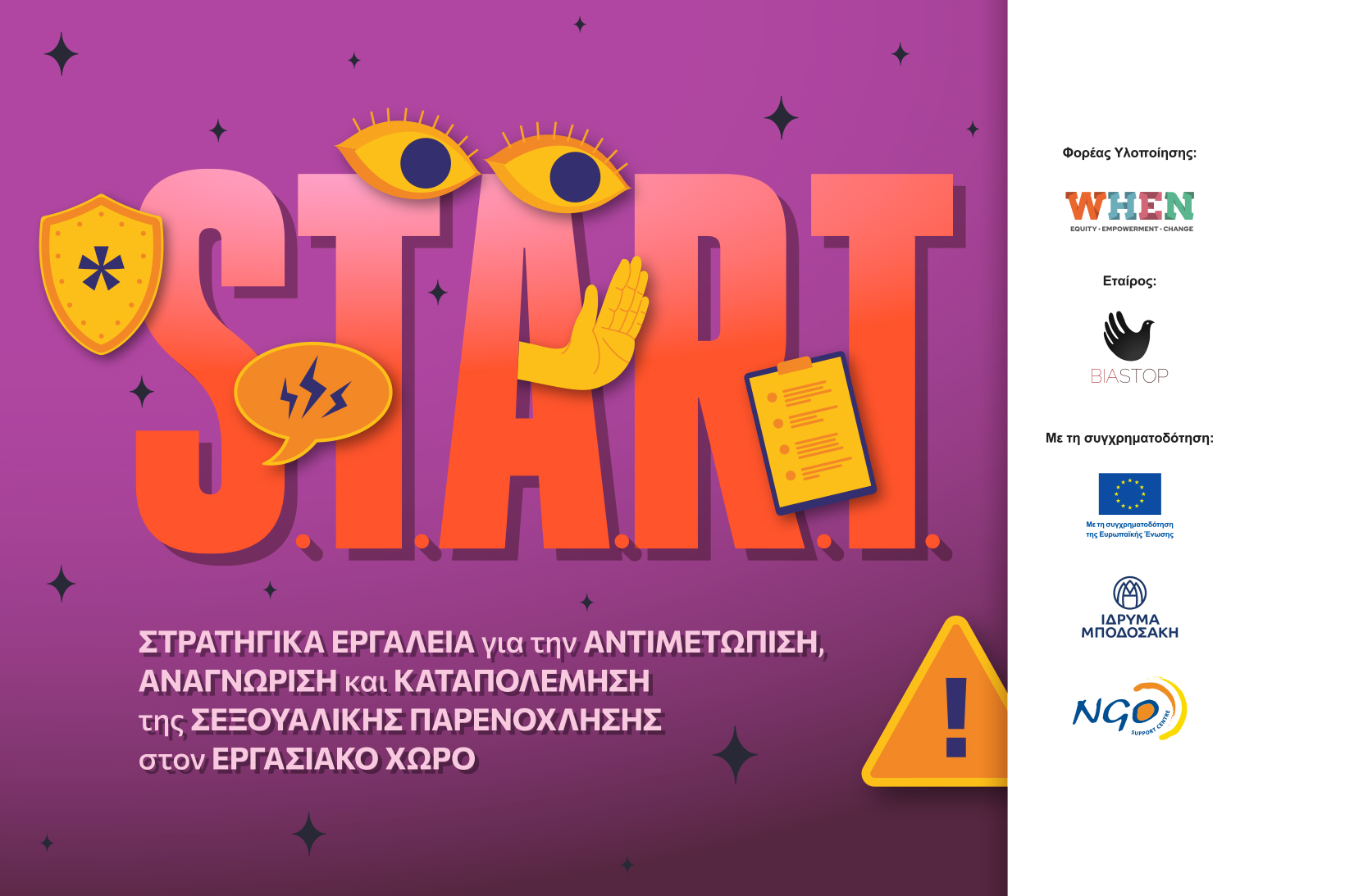
Aiming to create safer and more supportive work environments, based on trust and zero tolerance towards sexual harassment, WHEN, in collaboration with the organization VIA STOP, is implementing the S.T.A.R.T. project, a comprehensive prevention, awareness and support plan, both to support survivors and to empower legal professionals to recognize, manage and combat sexual harassment incidents with sensitivity and efficiency.

Within the framework of the project, free Legal Counseling is provided to victims and witnesses, educational seminars are implemented for Law School students, lawyers and labor inspectors, and informative content with tools, practical instructions and digital support media is created on the Safe & Fair digital hub.

There you will also find a special content category for Employers & Executives with rich content on the creation and cultivation of equal and safe working environments.

Tools

Here, you can find seminars and manuals for preventing & combating sexual harassment at work, tools that will help you cultivate a culture of safety and respect in your workplace.


TRAINING SEMINAR FOR PROFESSIONALS

Effective victim support requires a combination of legal knowledge, empathy and practical skills. In order to provide professionals with the tools to identify, manage and combat sexual harassment incidents with sensitivity and effectiveness, the seminar includes information on the legal framework and the rights of employees in cases of sexual harassment, practical tools for identifying and documenting incidents, understanding the psycho-emotional impacts of trauma and avoiding re-victimization, as well as approaching stereotypes, social and professional barriers that make it difficult to report and support victims.

SAFE AT WORK TRAINING SEMINAR

WHEN, in collaboration with ActionAid, organized a free online training seminar on preventing and combating sexual harassment at work, for the tourism sector.

The aim of the seminar is to ensure that all people involved in the labor market have the tools to prevent and combat sexual harassment, manage any problematic behaviors and support victims of sexual harassment in their work environment.

See all Safe At Work seminars.

Manuals

TITLOdigos_START_cover (1)
News, Tools |

S.T.A.R.T. | Awareness guide for professionals

Recent surveys have shown that, in Greece and Europe, 85% of women in Greece have experienced some kind of sexual harassment in their workplace and 40% of individuals do not have sufficient information about the provided protection procedures.

The Manual for lawyers and employees of the Labor Inspectorate for the effective support of victims of sexual harassment at work is primarily addressed to young and trainee lawyers, law students and individuals working in the Labor Inspectorate, but also to any other professional who comes into contact and is called to support, practically and psycho-emotionally, individuals who have suffered sexual harassment at work or have witnessed such an incident.

TITLSaW_Staff_ENG_1240x1632_cover
Tools |

Safe at Work | Training Manual for Staff

This handbook covers what sexual harassment is and isn't, the context in which it can occur, and the ways in which we can deal with it when we are put in a difficult position. It also includes how we should behave at work, to foster inclusion and respect, how we can set our own boundaries, along with small but important rules of conduct that will help us not to violate, even unintentionally, the boundaries of our colleagues. Finally, the handbook closes with the myths that we need to debunk if we want to make a meaningful contribution to addressing the phenomenon of sexual harassment at work.